Upload your materials
PDFs, slides, notes, videos, images, study guides & more.

Features
Everything you need to master more
A whole study system.
Flashcards, notes, guided lessons, quizzes and timed exams — plus a tutor and a coach.

For students
Turn any class material into flashcards, notes, guided lessons, quizzes, timed exams, and more — with AI that actually helps you learn.
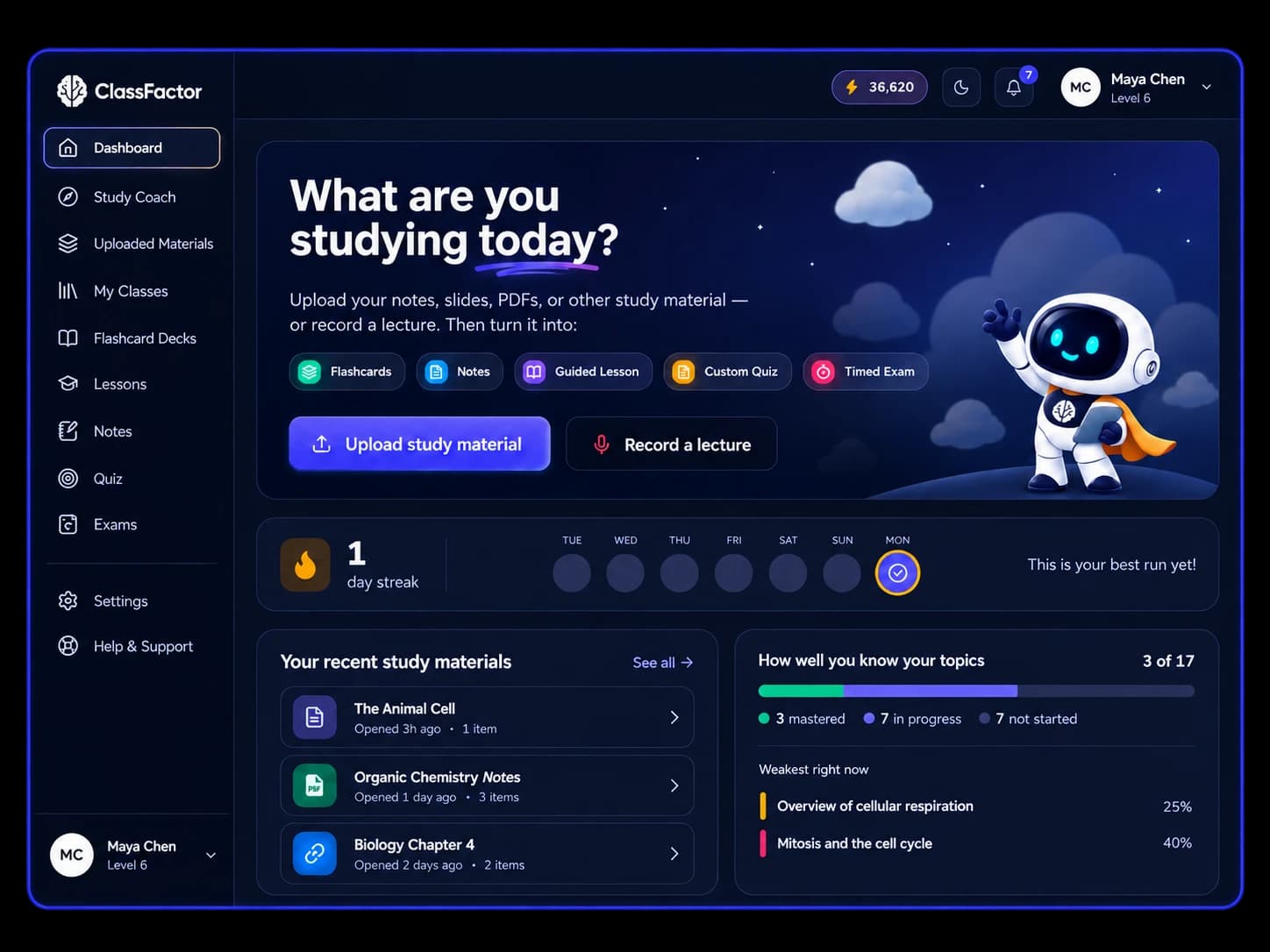






From your class material to real progress — in three simple steps.
PDFs, slides, notes, videos, images, study guides & more.

Get flashcards, notes, guided lessons, quizzes, timed exams and more — instantly.

Follow your personalized plan, get reminders, and track your progress over time.
Everything you need to learn, practice, and stay on track — all in one place.
PDFs, slides, notes, videos, images, study guides & more.
Turn your material into smart flashcards instantly.
Get clean, structured notes from your uploads.
Learn with step-by-step explanations.

Practice questions that find your weak spots.
Simulate real exams and build confidence.

Get clear answers about your actual class material.

Stay organized, get reminders, and keep yourself accountable.

See what you know, what to focus on, and how you’re improving.
AI Study Coach
The ClassFactor Study Coach helps you stay organized, motivated, and on track. Get personalized study plans, reminders, weak-area insights, and gentle accountability — so you can actually keep up with your classes and reach your goals.

3 days until your Biology midterm
8:00 AMYou’re right on track. Let’s finish strong!

Focus area for today
YesterdayYou missed the most questions on Genetics. Review that deck.

Time to study
7:30 PMYou usually study in the evening. A 45-min session now will keep you on track.

Keep it up, Alex! 💪
YesterdayConsistency is what gets results.
AI Tutor
Get clear, step-by-step explanations based on your actual class material. Whether it’s a tough concept, a practice question, or your notes, the AI Tutor is here to help you understand — not just give you the answer.
Why is the mitochondria called the powerhouse of the cell?
Mitochondria produce most of the cell’s ATP, which gives the cell energy. They convert nutrients into energy the cell can use to perform its functions, which is why they’re often called the powerhouse of the cell.
100% free to start
Core features are always free
No credit card
Seriously. Start right away.
Privacy first
Your study material stays private and is never sold.
Study smarter. Improve your grades.
Learn more in less time and walk into exams ready.
Real students. Real results.

“ClassFactor saved me so much time. The Study Coach keeps me accountable and I walk into exams feeling ready!”

“The quizzes actually show me what I don’t know. The AI Tutor explains it so simply.”

“Finally a tool that does more than flashcards. The reminders help me stay consistent.”

Upload your materials and get the tools, support, and structure you need to learn better, improve your grades, and stay on track.